RESEARCH PARTNERSHIPS
Based on our value to “continually learn and educate… [and be] guided by lived experience and evidence-based knowledge”, we collaborate with scientists and participate in research projects.
The findings of two of these projects are shared here.
Café Scientifique: Substance Use and the Toxic Drug Crisis in Rural Canada
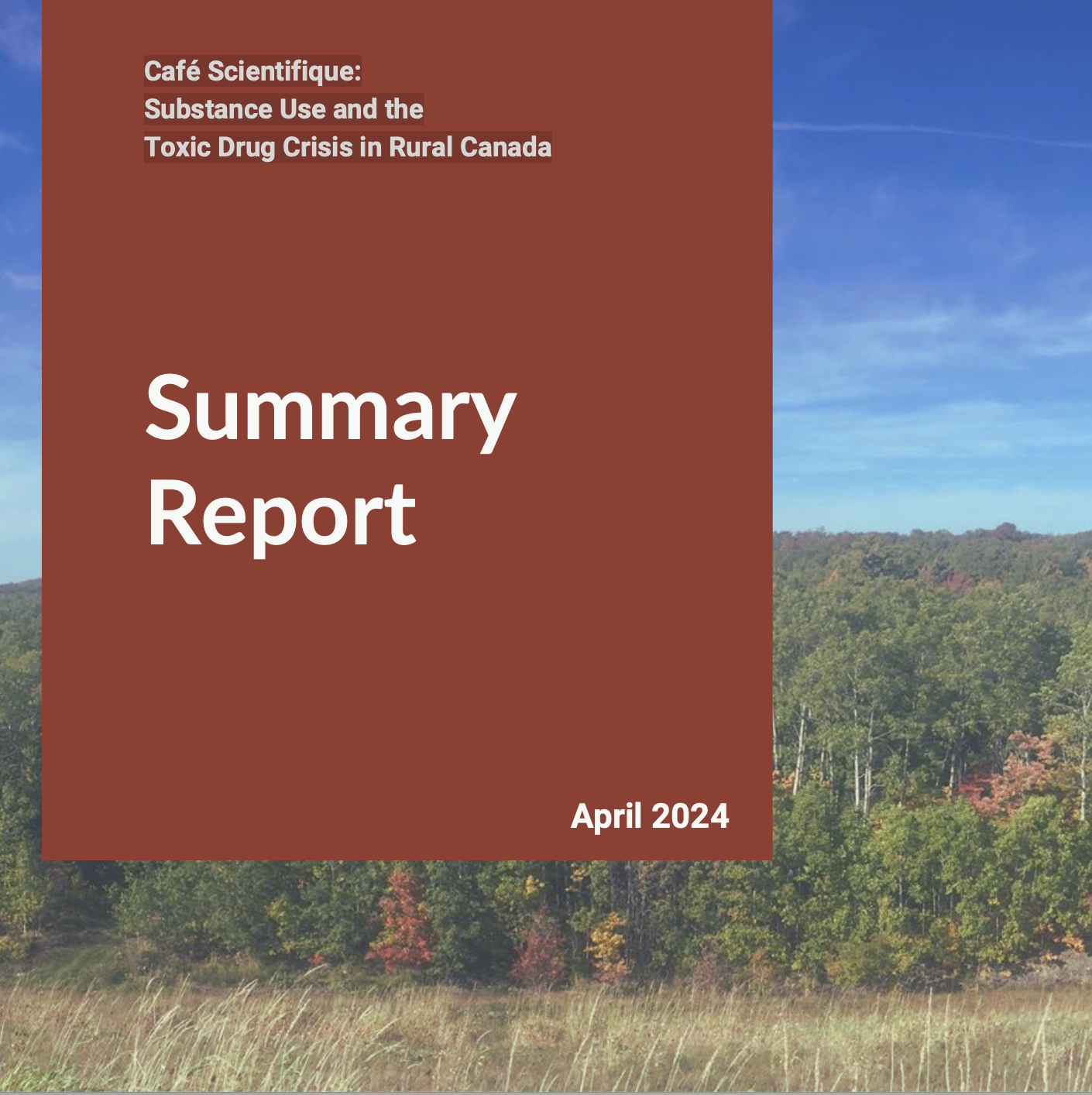
In February 2024, nearly 100 people from across Canada participated in a Café
Scientifique on substance use and the toxic drug crisis in rural Canada.
A panel of community experts was convened to unpack research evidence and share
stories from their families, communities and own lived experiences related to the
topic. Following the panel, attendees engaged in small group discussions to share
their experiences and collaborate on strategies for addressing this issue within their
communities. This report outlines the main points and considerations discussed by
attendees during these conversations.
Attendees emphasized that people from all walks of life are impacted by the toxic
drug crisis, including their family, friends and neighbours. This underscores the
urgent need for awareness and action to address stigma and other underlying
factors. Attendees identified some of these factors including past traumatic
experiences, housing insecurity, poverty, isolation, strained social networks, and
limited availability of health and social services.
Despite challenges such as stigma and geographic isolation, attendees identified
many strengths within rural communities that may help address substance use and
the toxic drug crisis, including a strong sense of unity and mutual support, and
resourcefulness in delivering services to hard-to-reach populations.
Attendees identified their top four priorities for addressing substance use and the
toxic drug crisis in rural Canada. These priorities included expanding low-barrier
health and social services with a focus on harm reduction and housing supports;
fostering community belonging through stigma reduction efforts; increasing human
and financial resources to support rural communities; and addressing root causes
like poverty and housing. These priorities will require mobilizing entire communities
for action and centreing the voices and experiences of people who use drugs.
Unpaid Family Caregiving for People Who Use Drugs in Rural Western Canada
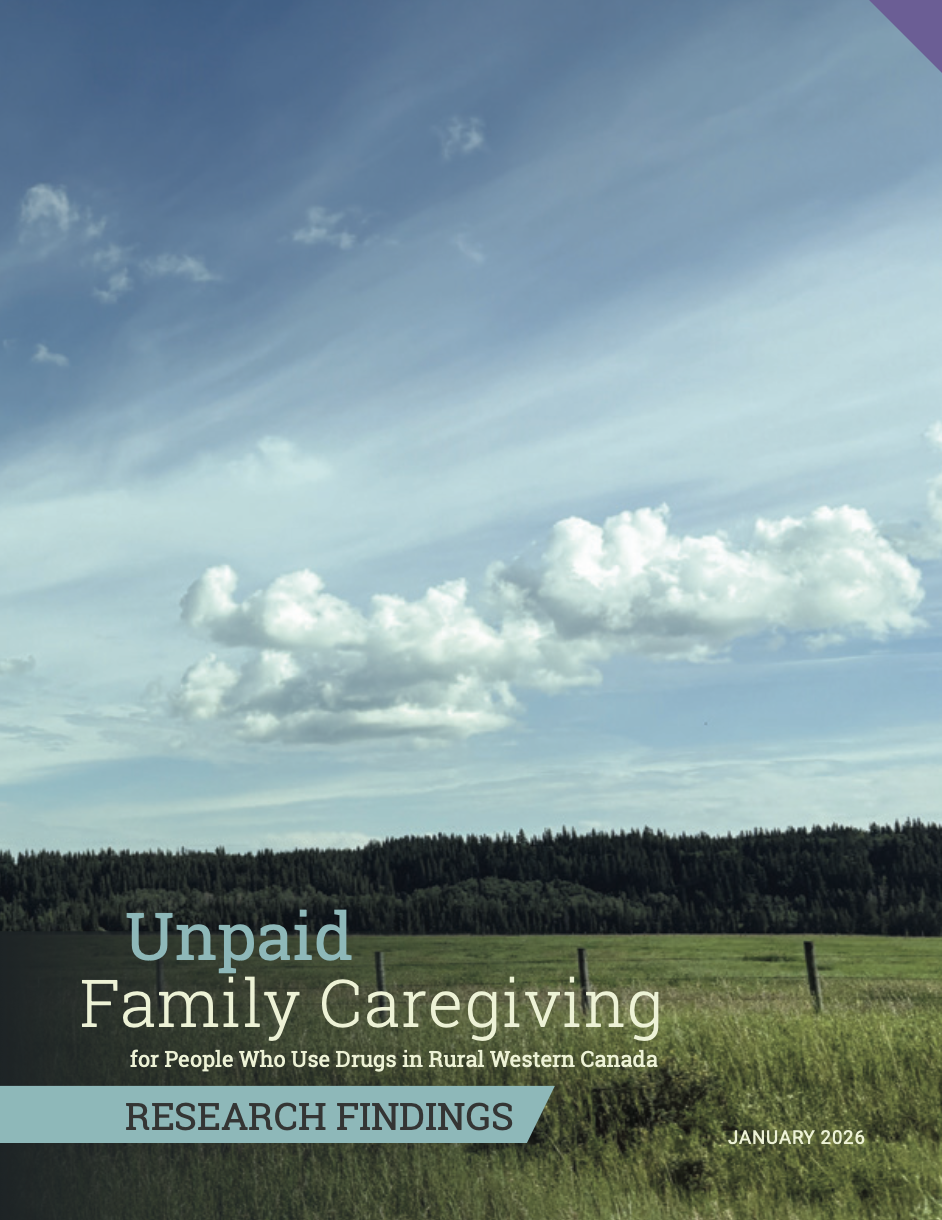
This research was conducted in rural communities across the three Prairie provinces: Alberta, Saskatchewan, and Manitoba. This region of Canada has a significant rural population compared to other regions of Canada and has been impacted by the unregulated toxic drug crisis. Approximately, 14,300 people across the Prairies have died from a drug-related death since 2016.
This research is a community-
based qualitative study. In Fall
2021, we convened a working group
to design and lead the research.
The 16-person working group is
composed of individuals across the
Prairies, including academics, family
members of PWUD, people with
lived experience of substance use,
and community-based organization
staff.
STOPPING THE HARM: PSYCHOSOCIAL OUTCOMES OF FAMILIES OF THE OPIOID EPIDEMIC

In 2020 we partnered with UBC researcher Jamie Piercy in a study that looked at the characteristics and perceived needs of families affected by the overdose crisis. Our role was in recruiting participants and among the 354 respondents were many MSTH members.
The study looked at the health outcomes of families affected by substance use, including those who had lost a loved one (70%) and those with a loved one actively using (30%).
The study asked the question “How are loved ones doing, emotionally, socially and physically"?” and found that:
Participants reported elevated rates of depression, anxiety and reduced efficacy in managing emotions.
Nearly half reported feeling stigma or judged by peers after the death of their loved one.
Drug-related harms and the loss of a loved one were related to high levels of grief and subsequent physical health changes.
Those with living loved ones reported higher levels of anxiety, financial strain, and helplessness than the bereaved, who reported less happiness and meaning in daily life.
Families reported cost, access, stigma and the COVID-19 pandemic as barriers to receiving adequate supports. Overall families show high rates of emotional and physical health concerns and those with a loved one still struggling are at ongoing risk. Family members are motivated for treatment despite the reported barriers. Focused study and target supports are required.
MOTHER’S STORIES OF ADVOCACY - Following their Child’s Substance Passing - Research Project
In 2021, our project was the recipient of the Excellence in Community-Campus Research Partnership award, from Community-Based Research Canada (CBRCanada), a national award sponsored by SSHRC.
University researchers and parent advocates, including members of MSTH came together to participate in the first Canadian qualitative research project about parent advocacy following substance use death.
Members of MSTH contributed to this project in a number of ways. MSTH co-founder Petra Schulz was a research partner, together with parent advocates Donna May (mumsDU) and Jennifer Woodside (Voice of the Family). They recruited 43 Canadian mothers who lost a child to substance use, who were interviewed by the researchers for this project. Many of the mothers interviewed were members of MSTH, but also included members of other family advocacy groups and individual advocates.
Project final report
The research developed this report to share the results of our work with community partners and stakeholders, as well as research participants in 2020. This report provides the background for the study, a high-level summary of what we found, how we are sharing our research with researchers and the community, and what we plan to do next.
Contact us with any questions about this project. We are happy to connect you with any of the research partners and principal investigators.

Knowledge Translation Project #SeeTheLives
In partnership with four parent advocates the research team also produced a video series, the #SeeTheLives project, and website to share insights from our research. This knowledge translation project #SeeTheLives featured three moms and one dad (Phil Haug, husband of co-founder Lorna Thomas, Petra Schulz and Kym Porter,MSTH, and Donna May, mumsDU), reading letters to their children. “This is what we’d say if only we still had the chance.” The project includes four videos and a study guide and the research team encourages anyone who might benefit from hearing these stories to make use of the materials.

Publications in peer-reviewed scientific journals
Bereaved mothers’ engagement in drug policy reform: A multisite qualitative analysis. By Emily Jenkins (UBC), Allie Slemon (UBC), Heather Morris (UofA), Elaine Hyshka (UofA), Petra Schulz (MSTH) and Rebecca J. Haines-Saah (UpfC). Published in the International Journal of Drug Policy. (October, 2020). https://doi.org/10.1016/j.drugpo.2020.103011

Podcasts

Crackdown Episode 4: “Blame” (featured interviews with Petra Schulz & Rebecca Haines-Saah). CRACKDOWN is a monthly podcast from Executive Producer Garth Mullins about drugs, drug policy and the drug war led by drug user activists and supported by research.
In this podcast Garth Mullins explores the question: “Who is to blame when someone dies?” Are those we call the “dealers” at fault? How do grieving families and friends process their loss? Some call for jail sentences, while others turn grief to advocacy.