MSTH Advocacy Spotlight - December 2025
At MSTH, we highlight some of our members and advocates from across Canada.
Our members do incredible work in their communities to raise awareness of the drug poisoning crisis in different ways.
Some facilitate our peer support groups Holding Hope and our peer bereavement support groups Healing Hearts, while others work in advocacy for MSTH in their communities and provinces.
To find out how YOU can become more involved please connect with us at info@momsstoptheharm.com
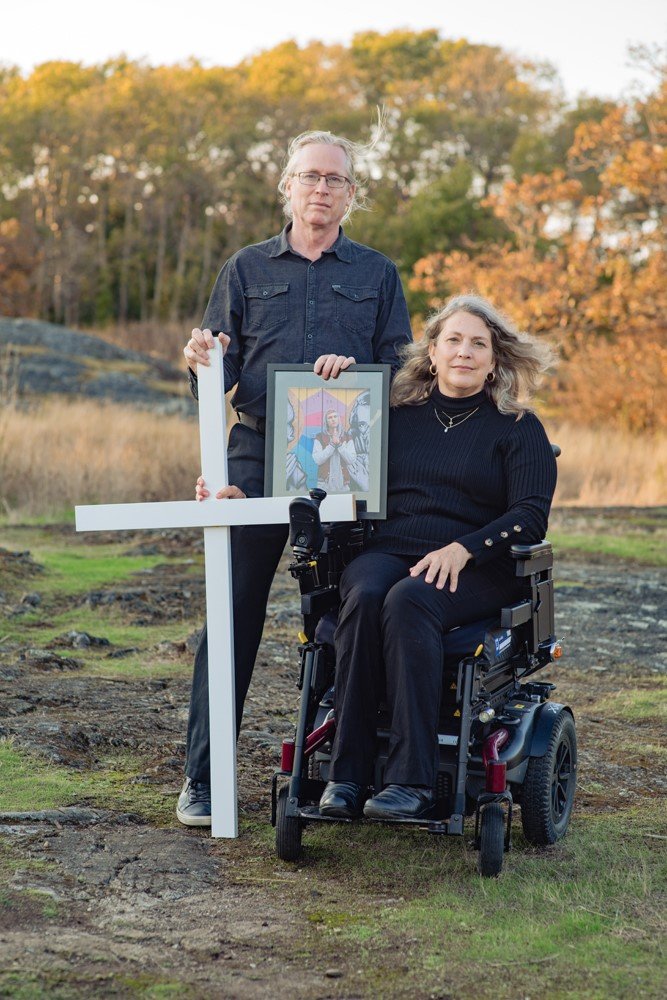
Glenn and Jan Mahoney, Victoria, BC
Why did you become a member of Moms Stop The Harm?
In December 2018 our son, Michael, died of toxic drug poisoning. He had been working with Dr. Korol and the staff at the Foundry Youth Clinic in Victoria. The social worker suggested we join MSTH, as they were a great community that understood what it was like to lose a loved one to toxic drugs and they could help us with our grief and help channel our anger into action.
What do you want people to know about Moms Stop the Harm?
Being an advocate means speaking out about the preventable deaths and harms being caused by the toxic drug supply and public policy -- holding the government’s feet to the fire to stop what is essentially the mass poisoning of Canadians. Helping families and communities impacted by the toxic drug crisis find a place of understanding and support is a part of advocacy as well.
The weight of this societal trauma and the current fractious partisan politics makes it hard for individuals to present a different voice. Moms Stop the Harm is a group of people with lived experience that support and encourage each other as we fight for change. The moral injury being inflicted by current public policy is damaging everyone, not only people who use substances. Moms Stop the Harm understands this and is a safe place to present a dissenting voice against the stigma, misunderstanding, misinformation, and toxic politics surrounding substance use and our loved ones who use or used substances.
Moms Stop the Harm represents a unique voice that needs to be heard. As an advocate we speak with understanding, care and compassion for Canadians suffering the loss of a loved one and for Canadians struggling and suffering from the harms of our deadly drug laws. It is hard and tiring to speak out and hold events, but if we don’t do whatever we can, in any way we can, then things will never change. I think of the Argentine Grandmothers who gathered day in and day out at the Argentine Legislature with pictures of their missing and murdered children and stolen grandchildren. Against all odds these grandmothers held the government to account, and they were eventually reunited with their stolen grand children. They are my example when ever I feel nervous speaking out or speaking to the media or when I feel discouraged and tired.
My husband and I have done our best to be present at rallies, marches, vigils and other MSTH events in Victoria. Our first event was attending the MSTH AGM meeting in Vancouver in 2019. I then volunteered to help with IOAD, organizing and helping to make and hang purple ribbons around downtown Victoria. The largest number of ribbons we hung was 500. Glenn made a big black coroplast coffin to take to rallies and marches and has always been there hauling and setting up, taking down -- my partner in all our MSTH activities. We have both spoken with the press, Ministers for Mental Health and Addictions, written letters and tried to create understanding through conversations.
With other advocates we attended government meetings to raise awareness of the urgent need for standards for residential treatment facilities. We also helped to draft a petition to have a national day of mourning for those lost to toxic drugs. The petition got put on the back burner due to the recent election, but its day is coming.
On the fifth year of the toxic drug crisis, we went every day for five days and sat with our protest signs and posters at the BC Legislature and did our best to educate and inform the security guards, the public and the tourists that wandered by about the history of drug policy in Canada and how it has led to the current toxic drug crisis.
This year when IOAD came around we took on a larger role, and I organized my first rally at the BC legislature. I now really appreciate all that it takes to set such an event up and to try and get people to show up and raise their voices. We have wanted to be more involved with the local First Nations Communities during IOAD, so this year we worked with the Native Friendship Center to hold two awareness events. It was a wonderful time to come together, share and hold space for the ones we have loved and lost. We plan to work together during IOAD next year. We also helped organize and represented MSTH at the September 1st rally by Doctors for Safer Drug Policy. There was a lot of content from that event in the Fifth Estate episode “Dying to Recover” . We hope to work together to make a bigger noise next year.
We have met so many wonderful people doing advocacy with MSTH. It is the coming together to try and make a difference that is the important thing. We can’t stop the toxic drug crisis on our own in isolation, but by coming together and supporting each other and collaborating with other organizations working towards the same goal we can have greater influence and strength. I also think it is important to get together every so often to have a social fun time.
What does being an advocate mean to you?
MSTH started as a small group of grieving moms who turned that grief and anger towards making change to end the death and harms being caused by Canada’s senseless drug policies. It is now a nation-wide group of Canadians determined to keep working till deaths and harms created by drug policies, based in racism, stigma and infringement of rights, come to an end. Moms Stop the Harm facilitates support groups in person and remote over the web. They also work in communities large and small to advocate, lobby and work for change. Leslie McBain is right when she says, “don’t mess with the Moms.”